The Mountain Didn't Change
Fear, AI and the stories we tell ourselves about growth
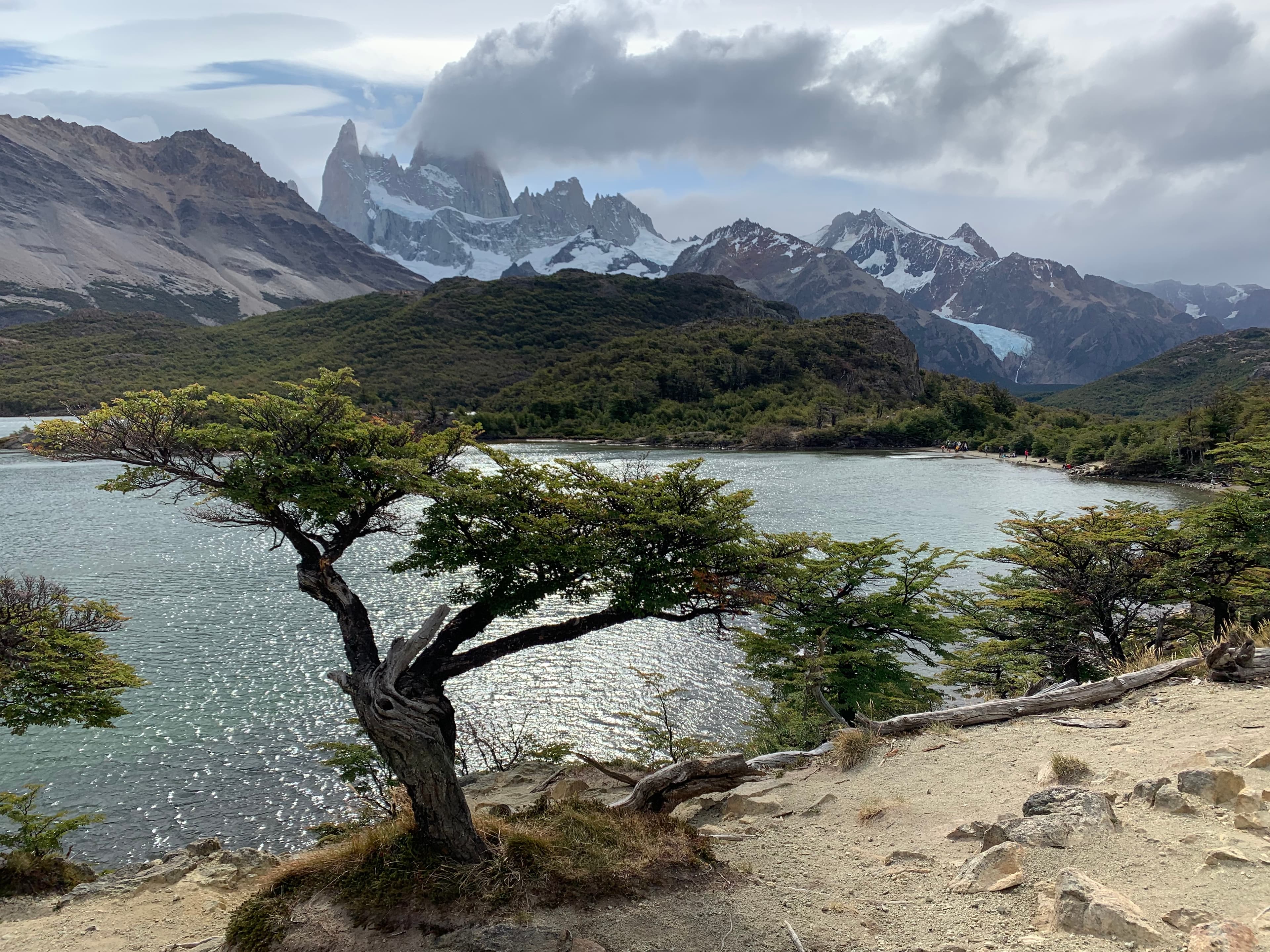
Patagonia is at the edge of the world. The second you see the landscape you can’t help but hear a David Attenborough monologue in your head.
The Perito Moreno glacier gets all the headlines. Rightly so. When that bad boy calves it sounds like thunder coming from below. Like Neptune himself is about to take a bow.
It’s terrifying.
For me though, it wasn’t the most frightening part of the trip.
That came at the base of Mount Fitz Roy.
I don’t think I’ve ever been more scared in my life.
“This is exciting”
It’s the wind.
Howling, dusty, relentless wind.
There’s a trail up to Laguna de los Tres in the Fitz Roy range. The lake sits in a bowl beneath three towering peaks. Even if you don’t recognise the name, I’m willing to bet you’ve seen a photo of it before. It’s one of the most recognisable mountain ranges on the planet.
The hike from El Chaltén, the nearest town, takes around eight hours in total. For most of it the trail is relatively gentle. Then comes the final climb.
Four hundred steep metres up loose rock and exposed mountainside.
The gradient wasn’t what got to me though.
It was the wind.
I’d never experienced anything like it. Every step felt like hiking with a giant bungee cord strapped to my back, dragging me back down the mountain.
The further I climbed, the tighter the cable pulled. There were steep drops on either side of the path. One bad slip and you’d disappear down the slope, with just enough time to realise exactly what had happened.
“I don’t feel safe.”
That was Heather, the only other member of our group still climbing beside me.
Hearing someone else say it out loud crystallised my own fear instantly.
Then a vicious gust knocked me clean off my feet. Literally.
Before I consciously realised it, I had already started turning away from the summit.
My body had made the decision before my brain had caught up.
Retreat.
That’s when JP arrived beside us.
“This is…” he began.
Terrifying.
The word appeared in my head immediately. I already knew what he was going to say.
“Exciting!”
Wait. What?!
Then he carried on up the mountain as if we were discussing the weather.
And just like that, the spell broke.
I turned back towards the summit and followed him.
Minutes later we reached the turquoise waters of Laguna de los Tres.
I had almost turned around just moments from the end.
Worse, I hadn’t even realised how close I already was.
Imposter syndrome
It’s funny how competence rarely feels like competence from the inside.
When you imagine mastery, you picture confidence. Calmness. Certainty.
But most of the time it doesn’t feel like that at all.
It feels like standing halfway up a mountain convinced you’ve made a terrible mistake.
The strange thing about difficult things is that your perception often gets worse as you get closer to succeeding. Beginners are blissfully ignorant. Then reality kicks in. You start to understand the scale of the challenge properly. Every gap in your knowledge suddenly feels gigantic.
Software engineering can feel like that now.
Especially in the age of AI.
Every week there’s a new framework, model or viral demo arriving reminding you how much you still don’t know. It’s very easy to convince yourself you’re falling behind. That everyone else has already figured it out. That you somehow snuck into the industry and the bill is finally about to arrive.
I think that’s why I still remember JP shouting “Exciting!” into the wind.
Nothing about the mountain changed in that moment.
The danger was still there.
The wind was still trying to throw us back down the slope.
The only thing that changed was the story I was telling myself about what I was experiencing.
Fear.
Or excitement.
Fraud.
Or growth.
From the inside, they can feel almost identical.