The Event Horizon
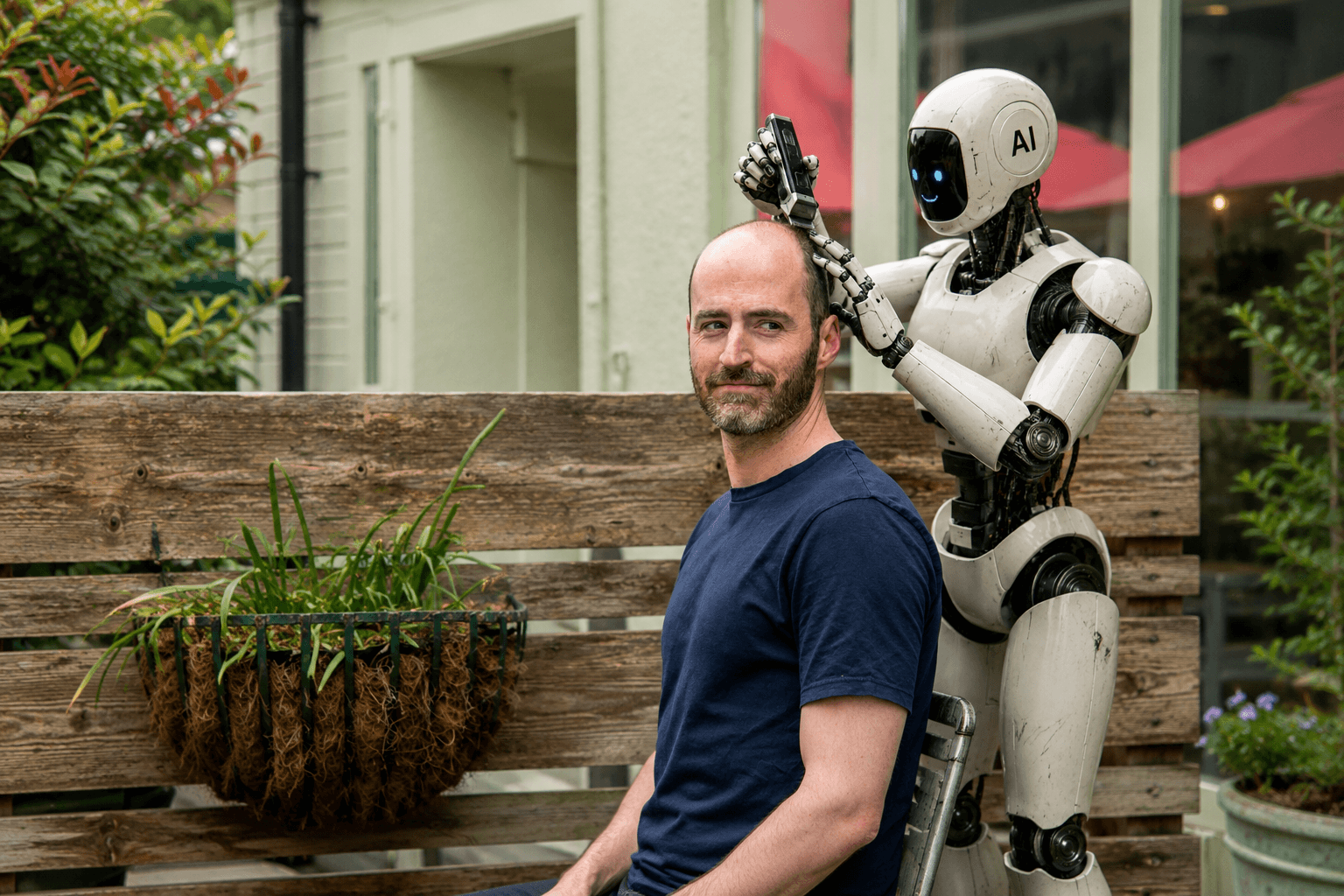
or: How I Learned to Stop Worrying and Love AI
They were excited. The CTO and Director of Engineering. Two engineers known across the company for being quiet and reserved. And here they were racing through a demo. Practically gushing. Wide toothy grins visible even in the tiny Google Meet boxes of the conference call.
This was a deep dive into AI agent orchestration.
Correctly structuring agents.md files in Cursor.
Setting up MCP servers.
Token usage leaderboards.
This was the tipping point. The event horizon.
Developers had known this was coming for a while. But now the expectation had flipped. Claude or Codex writes the first draft. You chime in afterwards. Not the other way around.
“And the best part is I didn’t have to write a single line of code!”
Nope. I did not like that.
Are you saying that most of my job is now reviewing someone else’s work?
But I like writing code.
This felt like a disaster.
My favourite part of the job had been supplanted by the part I merely tolerated.
But then again, I liked having a full head of hair too.
At some point you have a choice. You can hide behind the combover. A haircut fooling absolutely nobody. Or you can shave your head and start hitting the gym. Give people something else to look at. Something you can control.
Maybe it was finally time to get out the clippers.
Human smoke detectors
I’m not saying I didn’t fight it.
AI workflows are riddled with tripwires. It’s pretty easy to find things they can’t do. I used to bring that up a lot.
As if human engineers had never confidently shipped something catastrophic without thinking.
But somewhere along the line I came around.
This very site you are reading right now was largely conjured into existence through prompting instead of traditional programming.
I’d never used pnpm or Tailwind CSS before. I’d been deep in React Native for years. The last web project I’d scaffolded myself still used yarn and old school styled-components.
It didn’t matter.
The agent could build me a personalised demo project that I could then reverse engineer.
Instead of forcing me to hunt through pages of documentation, it was surfacing the exact information I needed at the exact moment I needed it.
Suddenly I could drop into unfamiliar stacks and become useful almost immediately.
This was where experience still mattered.
I’d felt a version of this before while migrating a React Native app from Redux to TanStack. Once the syntax stopped being the bottleneck, the real skill became knowing what questions to ask and when to ask them.
My judgement was what I was getting paid for now.
Not typing speed, boilerplate, or memorising APIs.
My ability to smell smoke before the AI got a chance to immolate itself.
Watching a computer bend over backwards to recreate old Redux-era workarounds in a modern TanStack world was almost funny. It built four hooks to solve a problem that didn’t even exist anymore.
Crashing the app within thirty seconds is apparently a small price to pay when all the tests are green.
What comes next
I don’t know what the future holds for us developers.
All I know is that when the mountain guides on Kilimanjaro started calling me ‘Pep’, I realised I wasn’t embarrassed by the bald head anymore. I was proud.
I’ll take comparisons to Pep Guardiola or Jason Statham any day.
Things are moving quickly. Even by tech standards. Come 2030, this might read as gobsmackingly naive.
But for the first time since all this started, I’m excited about what comes next.